
LAMINATI INDUSTRIALI
Vetroshield embossed
For cold storage rooms, Vetroresina’s GRP laminates are tested and approved for direct contact with food.
The ANTIBAC additive is a silver-based technology integrated into the gelcoat during production and distributed uniformly across the entire surface.
It helps reduce the microbial load in areas subject to frequent contact and helps prevent new colonization, offering additional protection throughout the product’s entire lifecycle.
REASONS TO CHOOSE FIBERGLASS LAMINATES

Easy to clean
Easy to sanitize and suitable for food contact, they do not release unwanted substances and help maintain high hygiene standards.

Protection and durability
They offer excellent protection against corrosive agents and moisture: waterproof, with low thermal expansion, and consistent performance over time.

Impact-resistant
Sturdy and reliable under stress, they withstand repeated impacts and mechanical loads: ideal for high-traffic environments with continuous movement.

Easy to repair
In the event of accidental impacts or minor damage, they can be quickly restored without compromising aesthetics or performance.

Easy to apply
Suitable for refinishing coatings and bonding to insulating substrates such as EPS, XPS, and polyurethane.
INTENDED USE
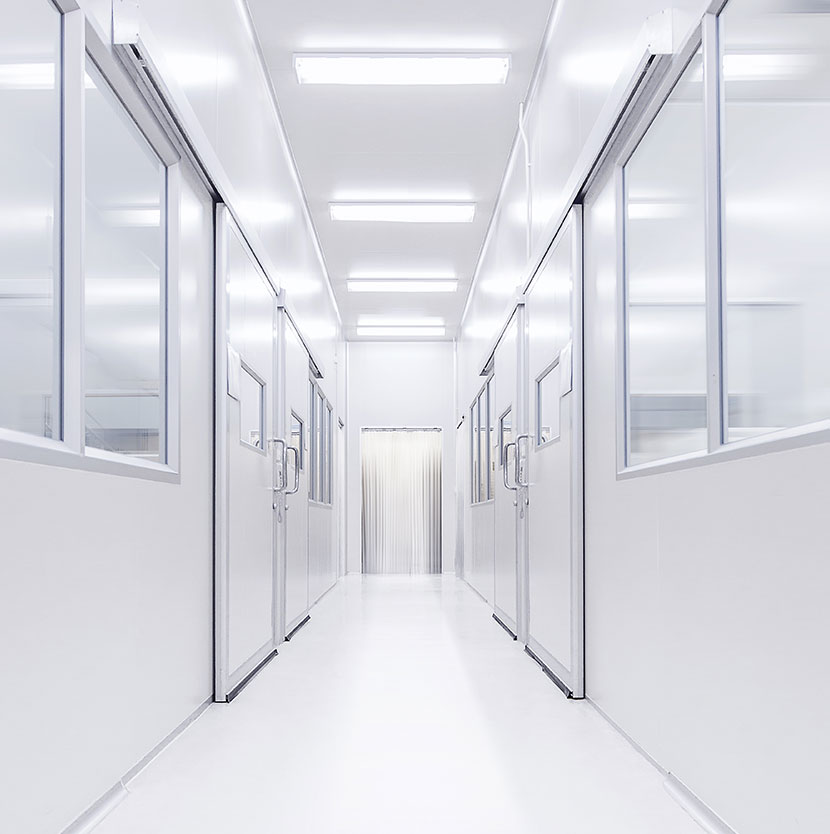
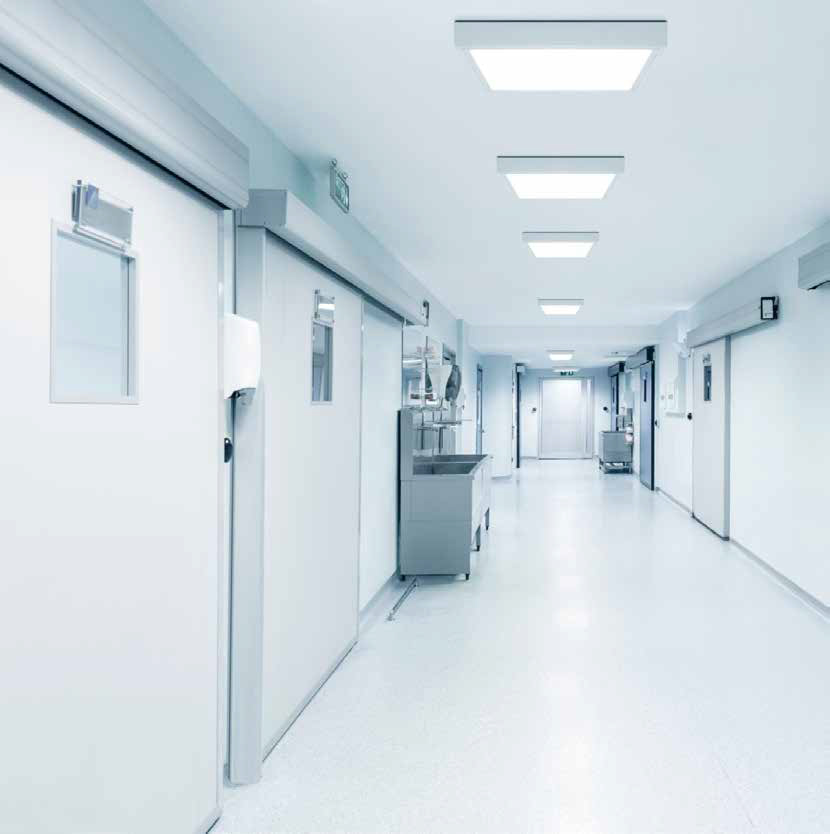
Cleanrooms: In cleanrooms, airborne particles are maintained at extremely low levels, and conditions such as temperature, humidity, and airflow are strictly regulated.
The main areas of application include: pharmaceutical industry, compounding in pharmacies, medical devices, biotechnology, food and beverage industry, electronics manufacturing, and aerospace.
Since any surface can become a source of contamination, wall and ceiling coverings must be non-porous, easy to clean, resistant to wear and chemicals, and designed to minimize seams and areas where dust can accumulate.
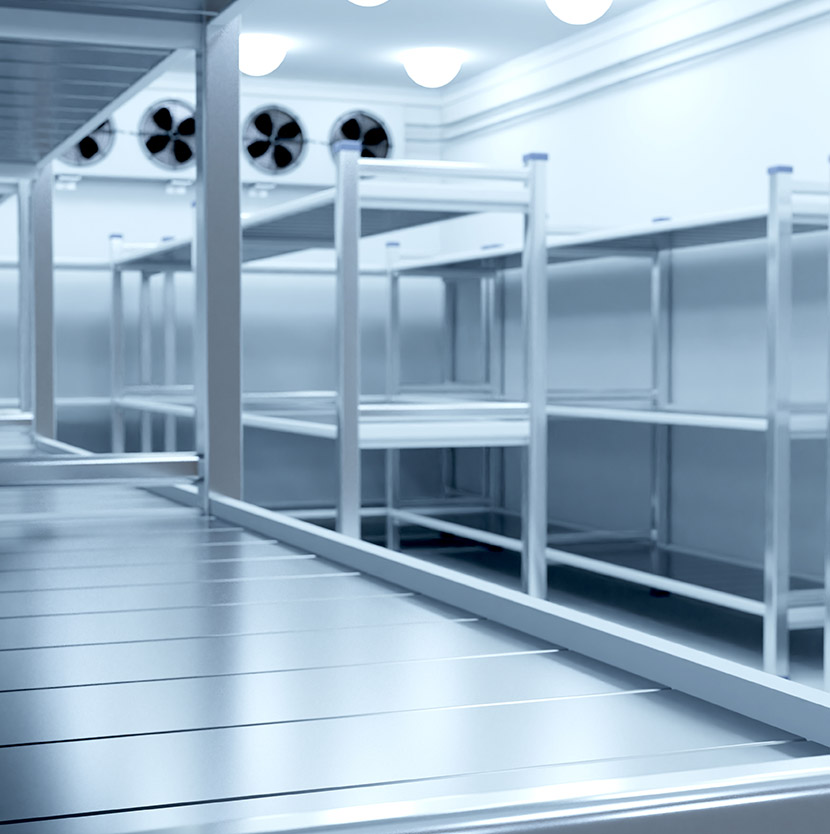
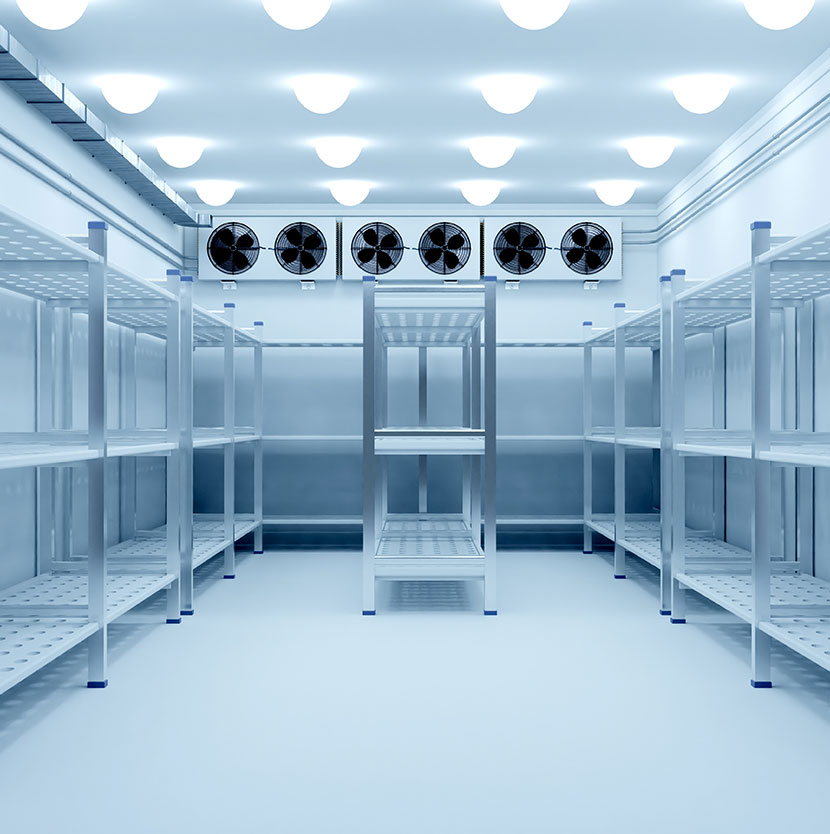
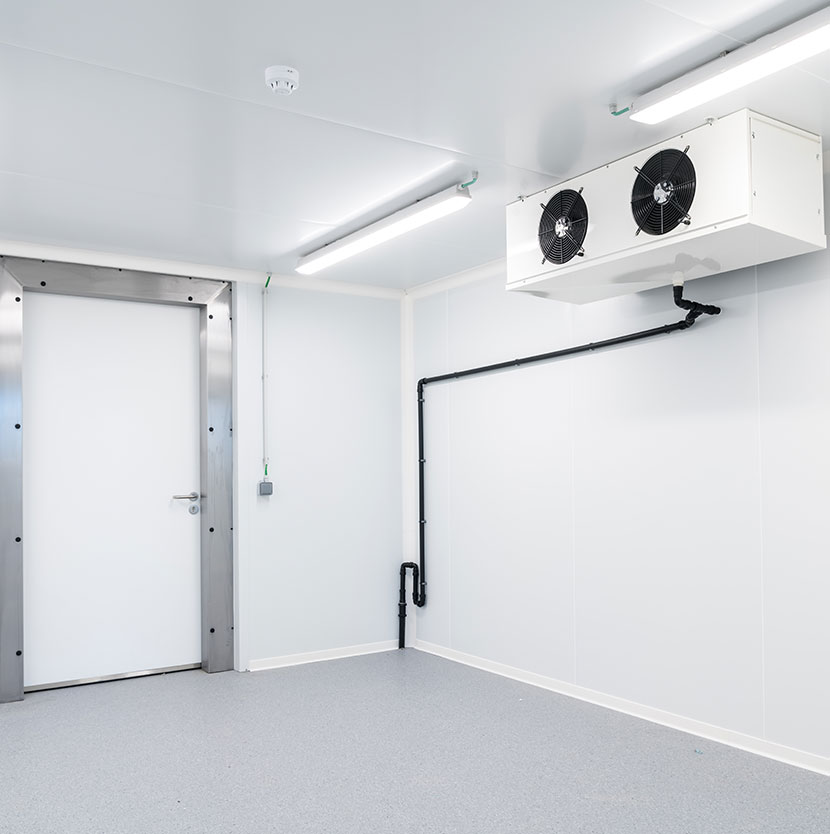
In cold storage rooms (refrigerated or frozen storage areas), temperature-sensitive goods such as food and medications are preserved by maintaining a constant operating temperature inside a thermally insulated and hygienic enclosure.
In this context, the materials must withstand moisture, repeated washing, and thermal stress, while ensuring hygiene and long-term durability.


